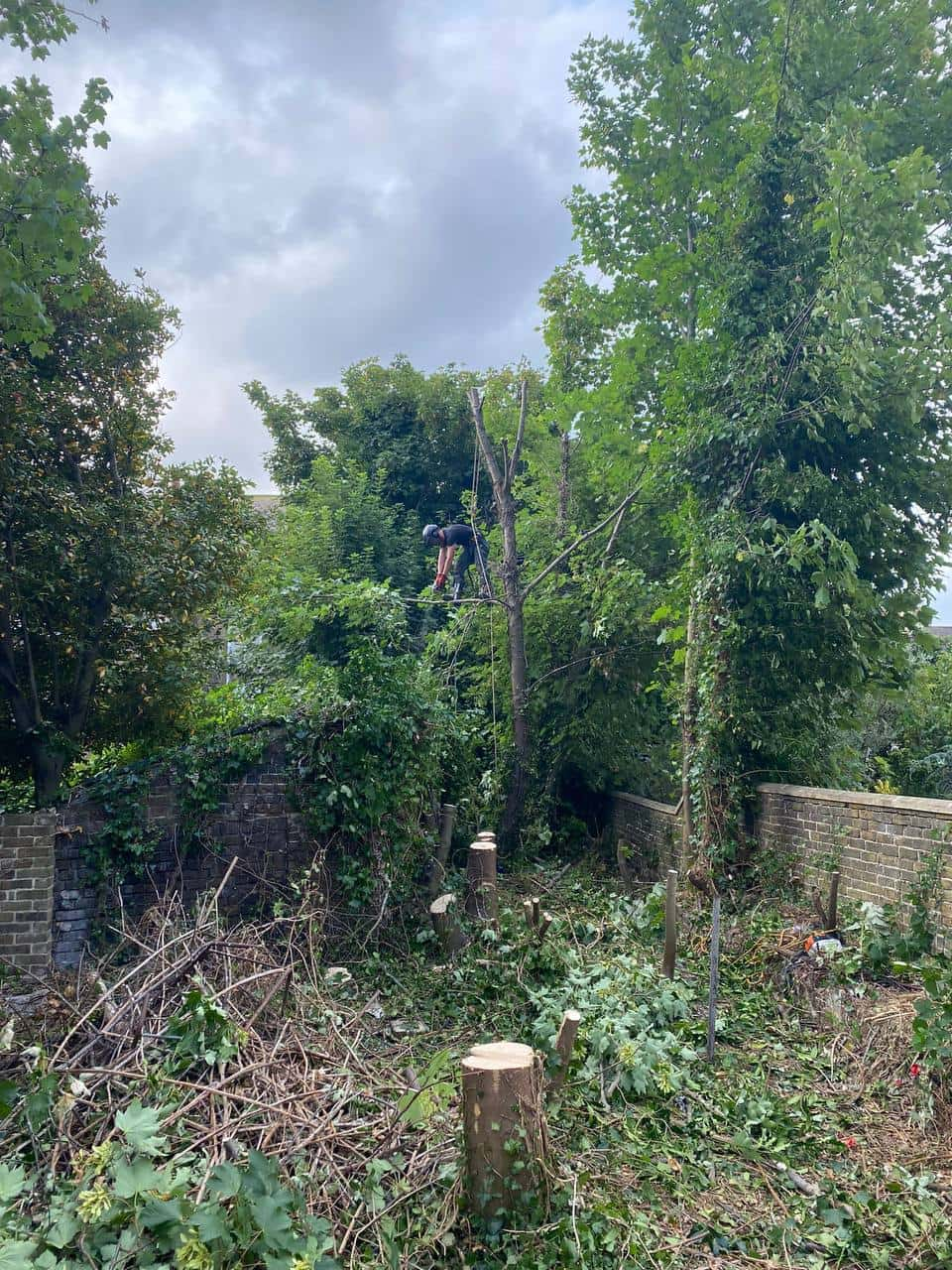
How Overhanging Branches Can Affect Roofs, Fences and Garden Structures
Trees are an attractive feature of many gardens, providing shade, privacy and natural character. However, as branches grow and extend beyond the tree’s original canopy, they can begin to affect nearby buildings and outdoor structures. Branches growing too close to a roof, fence or garden feature may cause gradual damage, create maintenance difficulties and increase the risk of problems during strong winds.
Understanding how overhanging branches affect surrounding structures can help property owners take action before minor issues become more serious. For homeowners in Lowestoft, Suffolk, regular tree maintenance and appropriate pruning can help protect both trees and the property around them.
How Overhanging Branches Can Damage Roofs
Branches extending over a roof can create several problems, particularly when they remain in direct contact with roofing materials. Even smaller branches may scrape against tiles, slates or roof coverings as they move in the wind. Repeated friction can gradually wear down surfaces and potentially disturb roof components.
Falling twigs and leaves can also collect in gutters and valleys. Over time, this debris may restrict water flow, causing rainwater to overflow or collect around vulnerable roof areas. Persistent blockages can contribute to dampness around fascia boards, soffits and external walls.
Larger branches present additional concerns during storms. Weak or damaged limbs may break and fall onto the roof, potentially damaging tiles, flashing or other components.
Professional tree pruning can help create suitable clearance between branches and roofing materials while maintaining the tree’s overall structure.
The Effect of Tree Growth on Fences and Boundary Structures
Fences are often positioned close to trees, making them vulnerable to surrounding growth. Branches that extend over fence panels may rub against the timber or place pressure on weaker sections during windy conditions.
Dense foliage can also reduce airflow and limit sunlight reaching wooden fencing. When timber remains damp for extended periods, it may become more vulnerable to deterioration.
In some cases, branches can grow through or become tangled in fence panels, making routine maintenance difficult. Attempting to remove them without considering how they are attached can cause unnecessary damage to both the tree and the fencing.
Selective pruning can help prevent branches from interfering with boundary structures while keeping the tree balanced and healthy.
Problems Caused by Overhanging Branches Around Garden Structures
Branches can affect more than the main property and its boundaries. Sheds, pergolas, greenhouses, summerhouses and garden seating areas may all be affected by nearby tree growth.
Low branches can restrict access, obstruct entrances or make outdoor spaces difficult to use. Contact between branches and lightweight structures may also cause damage as the limbs move in strong winds.
Falling leaves, fruit and small branches can create additional cleaning requirements, particularly on greenhouse roofs and sheltered garden areas. Where branches become too dense, they may also reduce natural light reaching patios and seating spaces.
Careful crown management can improve clearance and make garden structures more accessible without removing more of the canopy than necessary.
Warning Signs That Branches Need Attention
Not all overhanging branches require immediate removal. However, certain signs suggest that professional assessment may be worthwhile.
Look out for:
- Branches regularly touching or scraping against roof surfaces.
- Limbs extending directly above sheds, greenhouses or other vulnerable structures.
- Dead, cracked or visibly weakened branches.
- Dense growth collecting against gutters or restricting access.
- Branches pressing against fence panels or becoming tangled in structures.
- Large limbs that appear to have changed position or developed splits.
If a branch appears unstable or has recently been damaged, avoid standing beneath it or attempting to remove it yourself. A qualified tree surgeon can assess the situation and recommend an appropriate course of action.
Why Professional Tree Pruning Is Important
Managing overhanging branches involves more than simply cutting back anything that extends towards a building. Incorrect pruning can leave large wounds, affect the tree’s balance and encourage unsuitable regrowth.
A professional tree surgeon considers the species, age, condition and natural shape of the tree before carrying out work. Depending on the circumstances, suitable methods may include selective branch removal, crown lifting or crown reduction.
Crown lifting can provide greater clearance beneath the canopy, while crown reduction can reduce the overall spread of a tree when appropriate. The aim is to manage growth responsibly while preserving the tree’s health and natural structure.
For property owners in Lowestoft, Suffolk, professional tree surgery can help maintain safe clearance around buildings, fences and garden features.
Maintaining Suitable Clearance Around Your Property
Regularly checking the space between trees and nearby structures can help identify developing problems. Pay particular attention to branches that have grown noticeably since the previous growing season, as well as areas where foliage is beginning to obstruct roofs, gutters or access routes.
It is also useful to monitor trees after periods of strong wind, when damaged or weakened branches may become more noticeable. Arranging maintenance before branches become excessively overgrown can make future management more straightforward.
Conclusion
Overhanging branches can affect roofs, fences and garden structures through repeated contact, falling debris, excessive shade and potential storm damage. Identifying these issues early and arranging suitable pruning can help protect your property while maintaining healthy, well-managed trees.
If branches around your property are becoming difficult to manage, Lowestoft Tree Surgeons can help assess the growth and recommend appropriate tree surgery. Contact the team to discuss your requirements and arrange professional tree care in Lowestoft, Suffolk.
Call us on: 01502 441 299
Click here to find out more about Lowestoft Tree Surgeons
Click here to complete our contact form and see how we can help with your tree needs.